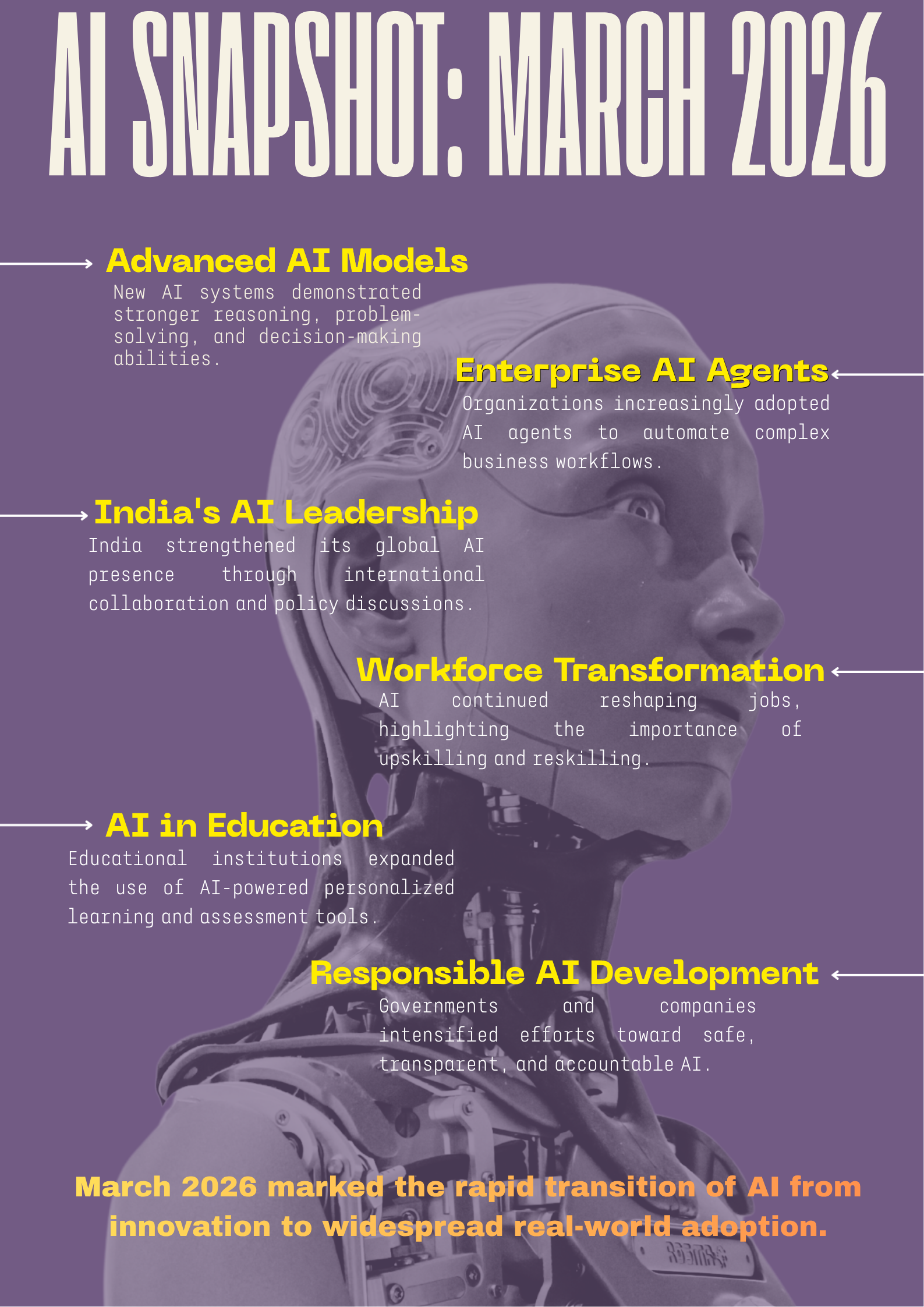
March 2026 brought a wave of transformative announcements and deployments across the global AI ecosystem. Key highlights of the month included breakthrough reasoning capabilities in advanced foundation models, the continued scaling of autonomous enterprise agents, India’s ascending role in global AI governance, ongoing workforce adjustments, expanding AI integration in education, and a heightened emphasis on responsible development and safety frameworks.
March 2026: AI News Highlights
1. Advanced AI Models Push Reasoning Capabilities Further 1
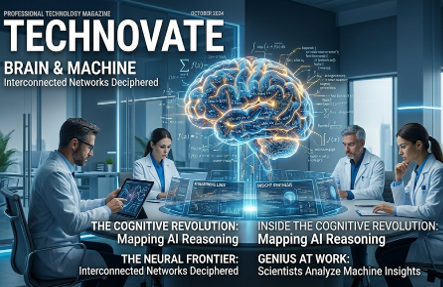
March 2026 saw major advances in AI reasoning models, with leading companies releasing systems capable of handling longer contexts, more complex problem-solving, and improved decision-making. These developments are making AI increasingly useful for research, business analysis, software engineering, and scientific applications.
The core breakthrough in these updated models lies in their structured chain-of-thought processing and self-correction abilities. By evaluating multiple potential solutions before generating a final response, these systems can tackle multi-disciplinary problems and logical tasks with a level of precision that was previously unattainable.
This progress signals a critical shift in foundation model design, focusing less on sheer parameter size and more on cognitive efficiency and reasoning depth. As these models become more capable of reasoning under uncertainty, they open up new frontiers in automated scientific discovery and complex system modeling.
2. AI Agents Move Into Enterprise Operations 2
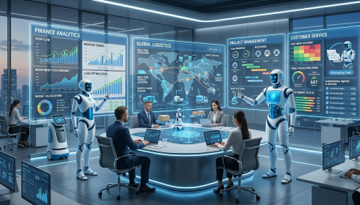
Organizations are increasingly deploying AI agents to automate workflows across customer service, finance, project management, and operations. Unlike traditional chatbots, these agents can execute multi-step tasks independently, reducing manual effort and improving efficiency.
The integration of these agents into backend enterprise databases and APIs allows them to retrieve real-time data, execute transactions, and coordinate between departments. This level of autonomy enables businesses to streamline complex procedures such as portfolio management, continuous auditing, and dynamic scheduling.
As operational agents become standard infrastructure, organizations are shifting from treating AI as an external productivity tool to integrating it as a core participant in business workflows. This change enables employees to move away from administrative tasks and focus on strategic decision-making and innovation.
3. India Strengthens Its Position in the Global AI Ecosystem 3

India hosted a major international AI summit that brought together policymakers, researchers, and technology leaders. Discussions focused on AI infrastructure, responsible development, talent cultivation, and international cooperation, reflecting India’s growing role in shaping the future of AI.
The summit highlighted India’s strategic push to establish robust sovereign AI compute capacity and develop open-source public datasets. By focusing on inclusive technology, policymakers aimed to create scalable models that address regional linguistic diversity and socio-economic challenges.
This proactive leadership positions India as a crucial hub for tech talent and policy innovation, bridging the gap between emerging markets and established technological leaders. The summit’s outcomes are expected to heavily influence collaborative initiatives and standards across Global South countries.
4. Workforce Transformation Remains a Key Topic 4
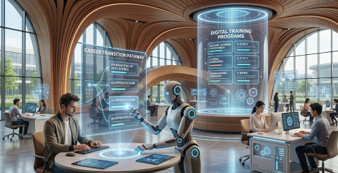
As AI systems become more capable, experts continue debating their impact on employment. Reports released in March suggested that knowledge-based professions may experience significant changes as AI takes on more analytical and administrative tasks, increasing the importance of reskilling and lifelong learning.
The focus of labor economists is shifting toward the redesign of existing roles rather than outright job elimination. Professionals are increasingly required to develop “AI literacy”—learning how to supervise autonomous agents, evaluate AI outputs, and integrate automated tools into their daily workflows.
To support this transition, academic institutions and corporations are building micro-credentialing programs and continuous education pathways. Proactive organizational planning is essential to ensure that workers are prepared to collaborate effectively with advanced cognitive technologies.
5. AI Adoption Accelerates Across Education 5
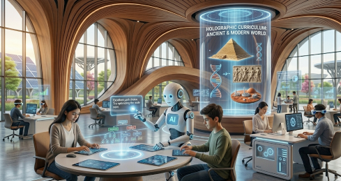
Educational institutions are increasingly integrating AI-powered tutoring systems, personalized learning platforms, and automated assessment tools. These technologies help educators provide customized learning experiences while reducing administrative workloads.
By leveraging adaptive assessment engines, these tools analyze student understanding in real-time, tailoring study plans to address specific learning gaps. This allows students to learn at their own pace, improving engagement and performance in traditionally challenging subject areas.
For teachers, AI adoption provides critical relief from administrative tasks like grading and lesson plan generation. This shift enables educators to dedicate more time to active mentoring, collaborative group projects, and supporting students who require individualized guidance.
6. Focus on Responsible AI Development Grows 6

Governments and technology companies continued expanding efforts to ensure AI systems remain safe, transparent, and accountable. Discussions focused on model evaluation, bias reduction, explainability, and governance frameworks to support responsible deployment.
A major topic of discussion was the creation of standardized, third-party benchmarks to audit reasoning models and autonomous agents before they are deployed in high-stakes environments. Ensuring that the systems can explain their decision pathways is essential for building user trust and safety.
This ongoing emphasis on governance underscores the global consensus that technological capability must not outpace safety infrastructure. By embedding compliance and risk monitoring early in the development lifecycle, the industry aims to foster secure, ethical AI systems.
Core Considerations for AI’s Practical Integration
As AI transitions from breakthrough announcements to widespread deployment, several critical themes emerge:
- Cognitive Reasoning Capabilities: The transition from pattern-matching language models to structured reasoning engines capable of advanced, multi-step problem solving.
- Autonomous Workflow Agents: Enterprise deployment of goal-oriented agents that operate across APIs and corporate systems to automate complex pipelines.
- Sovereign AI Infrastructure: India’s rising influence in global AI governance and its emphasis on building inclusive, localized AI infrastructure for the Global South.
- Reskilling and Career Adaptation: The necessity of continuous learning models and AI literacy to navigate shifts in knowledge-based professions.
- Adaptive Classrooms: The integration of personalized learning tools that scale educational support and free up teacher resources for mentoring.
- Standardized Safety Audits: Global cooperation on building third-party verification methods and explainable AI systems.
Conclusion
March 2026 demonstrated that artificial intelligence is becoming deeply embedded in organizations, education systems, and public policy. The rise of advanced reasoning models and enterprise AI agents shows that the technology is moving beyond experimentation into practical implementation.
At the same time, growing attention to workforce adaptation and responsible AI governance highlights the need to balance innovation with societal impact. As AI capabilities continue to expand, success will depend not only on technological progress but also on how effectively organizations and governments manage its adoption.